
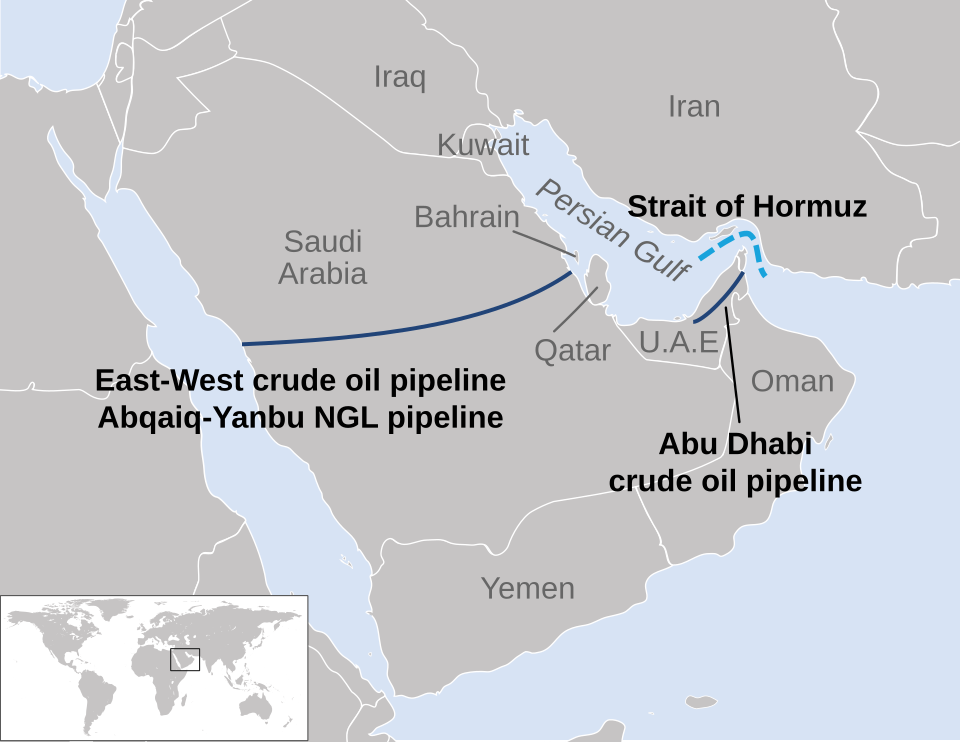
Saudi Arabia has temporarily shut its crucial East–West oil pipeline after drone attacks that Riyadh and Baghdad say originated from Iraqi territory, adding fresh pressure to regional energy supplies amid continuing disruption to shipping through the Strait of Hormuz.
Saudi authorities said the pipeline was closed as a precaution after multiple attacks affected facilities in the Riyadh and Madinah regions. The strikes caused injuries and damage, which officials said was being assessed. Satellite imagery cited by Reuters showed smoke rising from an area of the pipeline south of Medina following the September 10 attack.
Saudi Arabia's Foreign Ministry subsequently said the attacks involved drones launched from Iraq. Riyadh said it would refrain from retaliation for the time being following a request from Iraq's prime minister, allowing Baghdad an opportunity to take steps to prevent further attacks from its territory.
Iraq has confirmed that the attacks originated from its territory. Prime Minister Ali al-Zaidi ordered an investigation into the operations command in Maysan province, near the Iranian border, after authorities traced the launch site to the province. The commander responsible for operations in Maysan was subsequently dismissed.
Iraqi authorities also tightened security along the Iranian border. Reuters reported that the Shalamcheh border crossing was ordered closed as a precaution while security forces launched a wider operation to identify and pursue those responsible for the attacks.
The disruption is particularly significant because the approximately 1,200-kilometre East–West Pipeline has become an important alternative route for Saudi crude while shipping through the Strait of Hormuz remains severely constrained. Before the latest attack, the pipeline was moving roughly 4 million to 5 million barrels per day, equivalent to around 4% to 5% of global oil supply.
The pipeline has previously demonstrated capacity of about 7 million barrels per day, although current throughput before the shutdown was below that level. Saudi Arabia restored the system to its full 7-million-barrel-per-day capability earlier in 2026 following previous attacks.
The impact is now extending beyond Saudi Arabia. Asian refiners are preparing for tighter crude supplies, while uncertainty surrounds shipments from the Red Sea port of Yanbu. Industry sources cited by Reuters estimated that available storage at Yanbu could support exports for only several days if the pipeline outage persists.
As of September 15, the pipeline remained offline, and oil prices had risen amid concerns over the vulnerability of Saudi energy infrastructure and other major Middle Eastern supply routes. Brent crude was trading above $106 a barrel in early trading, according to Reuters.
For now, Riyadh has adopted a measured response while Baghdad investigates how the drones were launched from Iraqi territory and moves to prevent further attacks. No group had immediately claimed responsibility for the pipeline strikes.