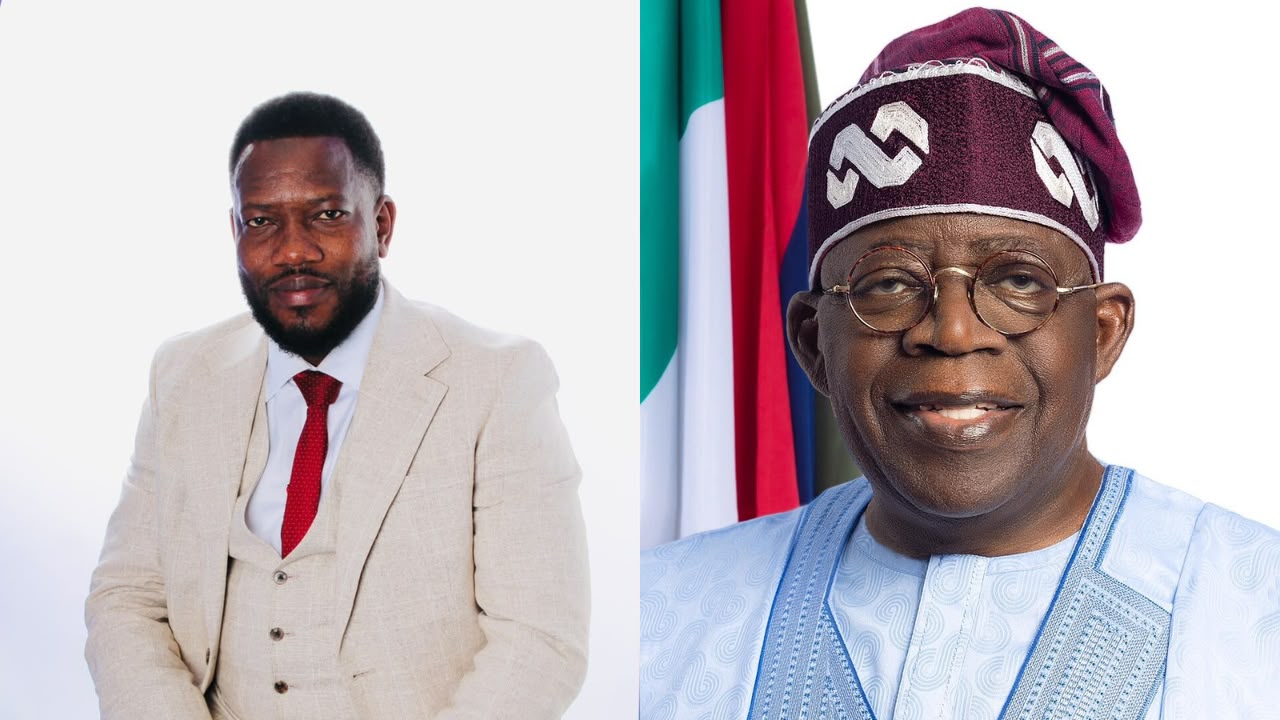
Comrade Taofeek Ajibike, CMgr FCMI Executive Secretary, The Bridge for Renewed Hope- Global Diaspora Secretariat
I support President Bola Ahmed Tinubu’s re-election for a second term in 2027. That is my political position, and I believe it is important to state it clearly rather than disguise it behind neutral language.
My support is based on my assessment of the reforms undertaken since 2023, the measurable changes recorded in a number of sectors, and my view that Nigeria should have the opportunity to see whether the reforms already underway can be consolidated into broader improvements in living standards.
This support does not require pretending that every problem has been solved. Nigerians continue to face serious pressures from the cost of living, poverty, insecurity, electricity shortages and unemployment. Those realities deserve acknowledgement.
However, political judgment should also take account of measurable results, institutional reforms and the direction of travel. It is against this background that I assess President Tinubu administration and explain why I personally support continuity.
Why My Support Is Based on Results
As Nigeria moves towards another presidential election, the debate over continuity under President Bola Ahmed Tinubu should go beyond political slogans, party affiliation and campaign rhetoric.
The more useful question is whether measurable improvements have occurred since the administration began its reform agenda in 2023, whether those improvements have strengthened Nigeria’s economic and institutional infrastructure, and significantly whether they are translating into better conditions for ordinary Nigerians.
Those of us that support the continuity of President Tinubu highlighted the improvements in macroeconomic stability, foreign reserves, oil production, financial-sector credibility, education financing and structural reform. Critics, however, continue to point to poverty, food insecurity, living costs, electricity, security and the pressure on household incomes. Both perspectives deserve thorough assessment to understand my view.
Economic Stabilisation: Progress That Can Be Measured
One of the clearest areas of measurable progress is Nigeria’s macroeconomic position.
In its June 2026 Article IV assessment, the International Monetary Fund said reforms undertaken over the preceding three years had produced improved macroeconomic outcomes and strengthened Nigeria’s resilience. The IMF estimated that real GDP grew by 4.0 per cent in 2025 and projected growth of 4.1 per cent in 2026.
Nigeria’s external reserves also improved. According to the IMF, gross international reserves increased from approximately US$40 billion at the end of 2024 to US$46 billion at the end of 2025. Net international reserves rose from US$23 billion to US$35 billion over the same period. The IMF staff report also recorded a 4.8 per cent of GDP current-account surplus in 2025.
These are not insignificant indicators. Higher reserves provide the country with a stronger buffer against external shocks and can strengthen confidence in the foreign-exchange system.
But macroeconomic statistics cannot be the sole measure of national progress. The real test is whether greater stability eventually results in higher household purchasing power, productive investment and employment.
Oil Production Has Recovered
Nigeria has also recorded improvement in crude-oil production.
The Nigerian Upstream Petroleum Regulatory Commission reported that average crude production reached 1.56 million barrels per day in June 2026, excluding condensates. Combined crude and condensate production was about 1.735 million barrels per day.
The regulator described the June crude figure as Nigeria’s highest since April 2020- a 74-month high and said production represented 104 per cent of the country’s 1.5 million-barrel-per-day OPEC quota.
Although production subsequently moderated, NUPRC reported that Nigeria produced 1,500,190 barrels of crude oil per day in August 2026, thereby meeting its OPEC quota for the fourth consecutive month. Combined crude and condensate production averaged approximately 1.678 million barrels per day in August.
For an economy in which petroleum remains an important source of foreign exchange and government revenue, more reliable production is an important development.
The longer-term challenge is to ensure that increased petroleum production contributes to diversification rather than postponing it.
Tax and Institutional Reform
The administration has also pursued significant changes to Nigeria’s tax system.
In June 2025, President Tinubu signed four tax reform laws covering taxation, tax administration, the establishment of the Nigeria Revenue Service and the Joint Revenue Board.
The reforms are intended to consolidate fragmented tax legislation, establish more uniform tax administration across the three tiers of government and restructure the national revenue authority.
Legislation alone, however, is not an achievement unless implementation produces a more predictable environment for individuals and businesses. The coming years will therefore provide a clearer test of whether the reforms reduce duplication, improve compliance and increase government revenue without imposing disproportionate costs on productive activity.
Another measurable institutional development occurred in October 2025, when the Financial Action Task Force removed Nigeria from its list of jurisdictions under increased monitoring commonly called the FATF grey list.
FATF said Nigeria had made significant progress in addressing deficiencies in its anti-money-laundering and counter-terrorist-financing framework.
The IMF subsequently welcomed that development while emphasising that sustained implementation would be necessary to preserve the gains.
Education and Skills Development
The administration’s record also includes expanded intervention in student financing and vocational education.
The Federal Ministry of Education’s Nigeria Education Sector Renewal Initiative currently reports approximately 1.59 million NELFUND beneficiaries.
The same official education dashboard reports 160,000 beneficiaries in the first Technical and Vocational Education and Training cohort, with more than 73,000 currently enrolled, more than 1,700 accredited training centres, and over 1.3 million applications received for the programme.
These numbers demonstrate substantial demand among young Nigerians for education financing and practical skills development.
The next measurement should be outcomes: completion rates, employment, enterprise creation and whether beneficiaries ultimately experience improved economic mobility.
The Other Side of the Record
Any serious assessment of the administration must also acknowledge that improved macroeconomic indicators have not eliminated the severe pressures facing Nigerian households.
The IMF estimated in June 2026 that 63 per cent of Nigerians were living below the national poverty line, while approximately 27 million people faced food insecurity in the autumn of 2025.
The World Bank reached a similarly nuanced conclusion in its April 2026 Nigeria Development Update. It said Nigeria had made meaningful progress in restoring macroeconomic stability, with stronger external and fiscal positions and robust growth.
But it also said household incomes had yet to recover fully and poverty remained high.
That distinction is critical.
A stronger reserve position matters. Higher oil production matters. More stable foreign exchange matters. Tax reform matters. Education loans and skills programmes matter.
But Nigerians understandably judge economic policy primarily through the price of food, transportation, rent, electricity, employment opportunities and what remains in their pockets at the end of the month.
Electricity, Security and Infrastructure Remain Major Tests
The IMF itself identified electricity, infrastructure, agriculture, human capital, governance and security as areas requiring further reform if Nigeria is to achieve faster and more inclusive growth.
These areas may ultimately determine how the current administration is judged.
Nigeria cannot achieve sustained industrialisation without reliable electricity. Businesses cannot maximise investment in an environment of persistent insecurity. Economic growth cannot become genuinely inclusive if agricultural productivity remains weak or if young Nigerians cannot find productive employment.
Continuity, therefore, would not simply mean extending existing policies. Its substantive test would be whether the next phase converts stabilisation into development outcomes that are increasingly visible in households and communities.
What the Continuity Argument Really Means
The argument advanced by supporters of continuity is essentially that structural reforms of the scale undertaken since 2023 require time to mature.
Foreign-exchange reform, subsidy reform, tax restructuring, infrastructure development, improvements in oil production and human-capital programmes do not produce their full effects instantaneously.
That is one argument voters will hear.
The counterargument is equally straightforward: governments ultimately have to demonstrate that reform produces improvements in citizens’ lives, and an electorate is entitled to judge whether the economic and social costs have been justified by the results delivered.
That is why the strongest assessment of President Tinubu’s record should neither pretend that nothing has improved nor suggest that Nigeria’s problems have been solved.
From Stabilisation to Shared Prosperity
There is now independently documented evidence of progress in several areas: economic growth has remained positive; international reserves have increased; oil production has recovered; Nigeria has exited FATF increased monitoring; major tax reforms have been enacted; and education and vocational programmes have reached substantial numbers of Nigerians.
There is equally credible evidence that poverty remains high, food insecurity affects millions and household incomes have not yet fully recovered.
The question approaching 2027 is therefore not simply whether reforms have taken place. They clearly have.
The more consequential question is whether the foundations established since 2023 can produce broader improvements in living standards, employment, electricity, security, infrastructure and economic opportunity.
That is the standard against which arguments for continuity and arguments for political change can be assessed.
Ultimately, Nigerian voters will determine how much weight to give the progress recorded so far, the hardships that remain, and the competing programmes presented to them ahead of the 2027 election.