Comrade Taofeek Ajibike, CMgr FCMI Executive Secretary, The Bridge for Renewed Hope- Global Diaspora Secretariat
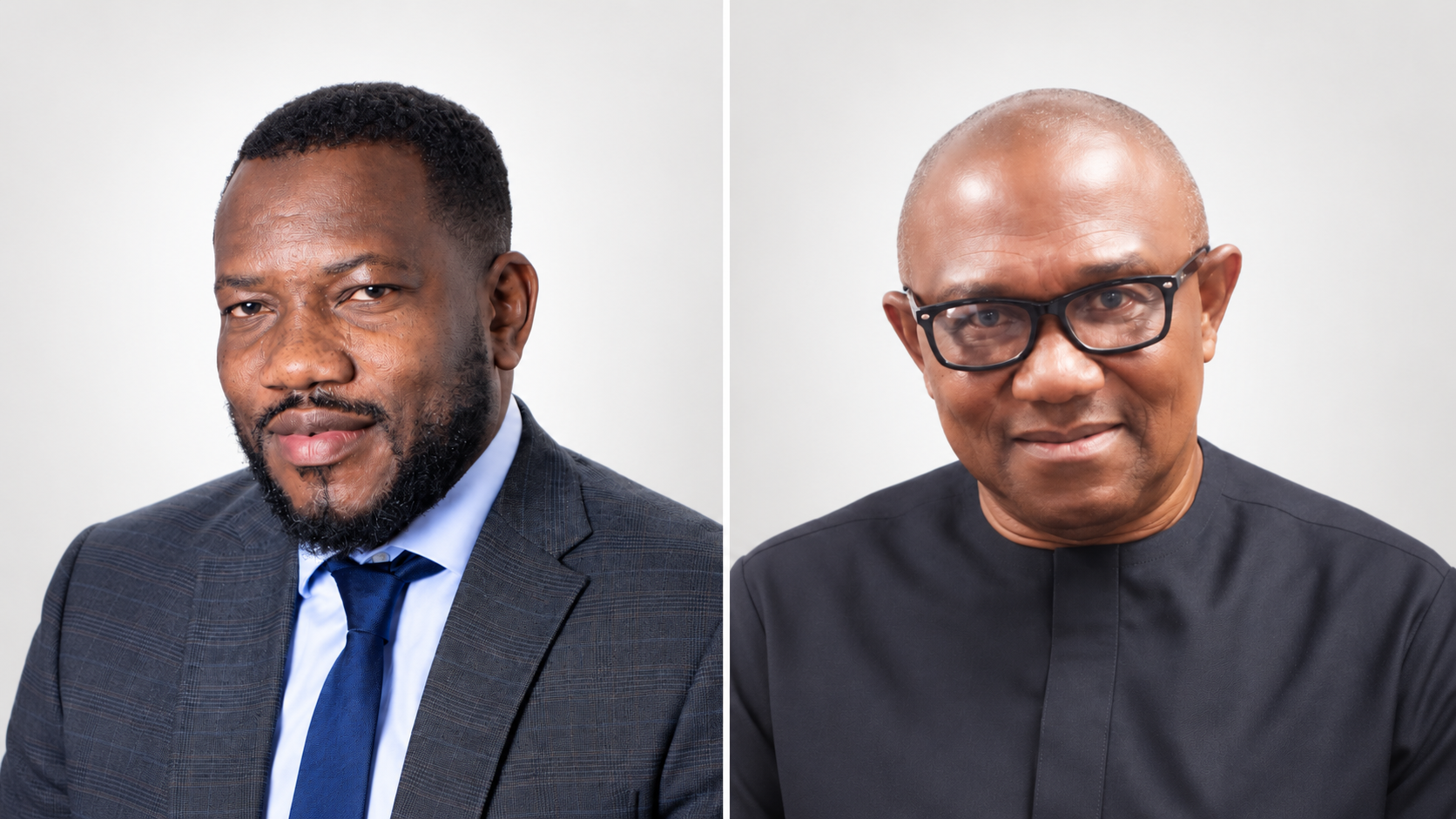
The appearance of Peter Obi at the inauguration of Seyi Makinde’s presidential campaign office in Abuja on 7 September 2026 has raised fresh questions about the direction of opposition politics ahead of the 2027 general election.
Obi, the Nigeria Democratic Congress (NDC) presidential candidate, attended the event organised for Makinde, the Allied People’s Movement (APM) candidate. He described Makinde as qualified to be president and called for cooperation among opposition politicians.
There is nothing inherently wrong with political opponents attending one another’s events. Democracy should encourage civility and dialogue. However, a presidential campaign-office inauguration is a political event intended to advance a candidate’s ambition. When another presidential candidate attends and publicly speaks favourably of that candidate, Nigerians are entitled to ask what the relationship represents.
Is it simply political friendship? Is it a broader opposition alliance? Or is it part of an arrangement in which individual ambitions may eventually be negotiated? These are legitimate questions that deserve transparent answers.
The One-Term Pledge
The more troubling issue, in my view, is Peter Obi’s commitment to serve only one four-year term if elected president.
Nigeria’s Constitution provides for a four-year presidential term and permits an eligible president to seek a second term. A second term is not guaranteed; it must be earned through another election. Nevertheless, the constitutional framework gives a president the opportunity to seek a renewed mandate from the electorate.
Why, then, would a candidate voluntarily give up that opportunity before even assuming office?
For me, such a concession raises serious questions about political desperation. If a candidate believes he has the vision, competence and programme required to transform Nigeria, why would he agree in advance not to seek a second mandate, even if Nigerians are satisfied with his performance?
Supporters of Obi may describe the pledge as an act of restraint, political trust or a commitment to honouring an agreement. Those arguments deserve consideration. But the presidency is not a private arrangement between political actors. It is a national responsibility, and the implications of any political agreement should be explained to the electorate.
The Electricity Question
The issue becomes more significant when Obi’s own comments on Nigeria’s electricity challenges are considered.
During his interview with Seun Okinbaloye on Channels Television’s Sunday Politics on 26 July 2026, Obi acknowledged that guaranteeing reliable, nationwide 24-hour electricity within four years would be impossible because the necessary power-generation and transmission infrastructure requires years to build. He nevertheless proposed measurable improvements, including increasing Nigeria’s ability to generate, transmit and distribute at least 10,000 megawatts of electricity.
In the same interview, he reaffirmed his commitment to serve only one four-year term.
This raises a fundamental question: if four years is insufficient to complete one of Nigeria’s most important development objectives, why voluntarily limit the opportunity to seek a second mandate?
Electricity is not an isolated challenge. Nigeria requires sustained reforms in infrastructure, industrialisation, education, security, agriculture and economic management. These are long-term national projects that demand continuity, institutional stability and consistent implementation.
A candidate who recognises the scale of these challenges should explain why he is willing to place a self-imposed political deadline on his presidency. What happens to unfinished reforms? How would continuity be guaranteed? And why should the electorate be denied the opportunity to renew the mandate of a president who may be making meaningful progress?
Obi has argued that four years is enough to demonstrate the direction Nigeria should take. That is a position he is entitled to hold. But it does not remove the need to explain how a single-term commitment would serve the country’s long-term interests.
For me, the pledge appears less like a governance strategy and more like a political concession designed to make an electoral arrangement attractive. That is my assessment, not a claim to know Obi’s private motives. He is entitled to explain otherwise, and Nigerians are entitled to question the wisdom of the arrangement.
Opposition Unity Must Be More Than Electoral Arithmetic
Obi’s appearance at Makinde’s campaign launch also raises questions about the substance of emerging opposition relationships.
Political cooperation can be constructive when it is based on shared principles and a credible programme for government. But unity, by itself, is not a programme. Nigerians deserve to know what any proposed alliance would mean for policy, leadership and accountability.
If opposition candidates intend to cooperate, they should explain the principles behind that cooperation. If they intend to contest separately, they should explain how their respective programmes differ. If a future electoral arrangement is being considered, the public deserves clarity rather than speculation.
The presidency should not be treated as an office to be allocated through political bargaining. It is a mandate to govern, deliver and build institutions that endure.
Our Political Position
As Executive Secretary of The Bridge for Renewed Hope- Global Diaspora Secretariat, I make no apology for supporting President Bola Ahmed Tinubu’s Renewed Hope Agenda and his continued leadership. Our political position is clear, and we believe the case for continuity should be made through evidence of delivery, the challenges confronting the country and a credible programme for the future.
That support does not prevent us from scrutinising the opposition. Every candidate seeking Nigeria’s highest office should be prepared to answer difficult questions about the consistency, practicality and implications of their proposals.
Nigeria Deserves Clarity
If Obi believes four years is sufficient for his programme, he should explain how that programme will be completed or sustained. If he believes major national objectives require longer, he should explain why he has voluntarily limited his opportunity to seek a renewed mandate.
For me, that unresolved tension is precisely why the one-term pledge appears to be an act of political desperation.
The 2027 election should be a contest of credible programmes, demonstrated capacity and accountable leadership. Nigerians deserve clarity from every candidate and not merely promises designed to make political alliances more convenient.
Nigeria needs leadership focused on the long-term national interest, not political arrangements that place the pursuit of power ahead of the demands of governance.