
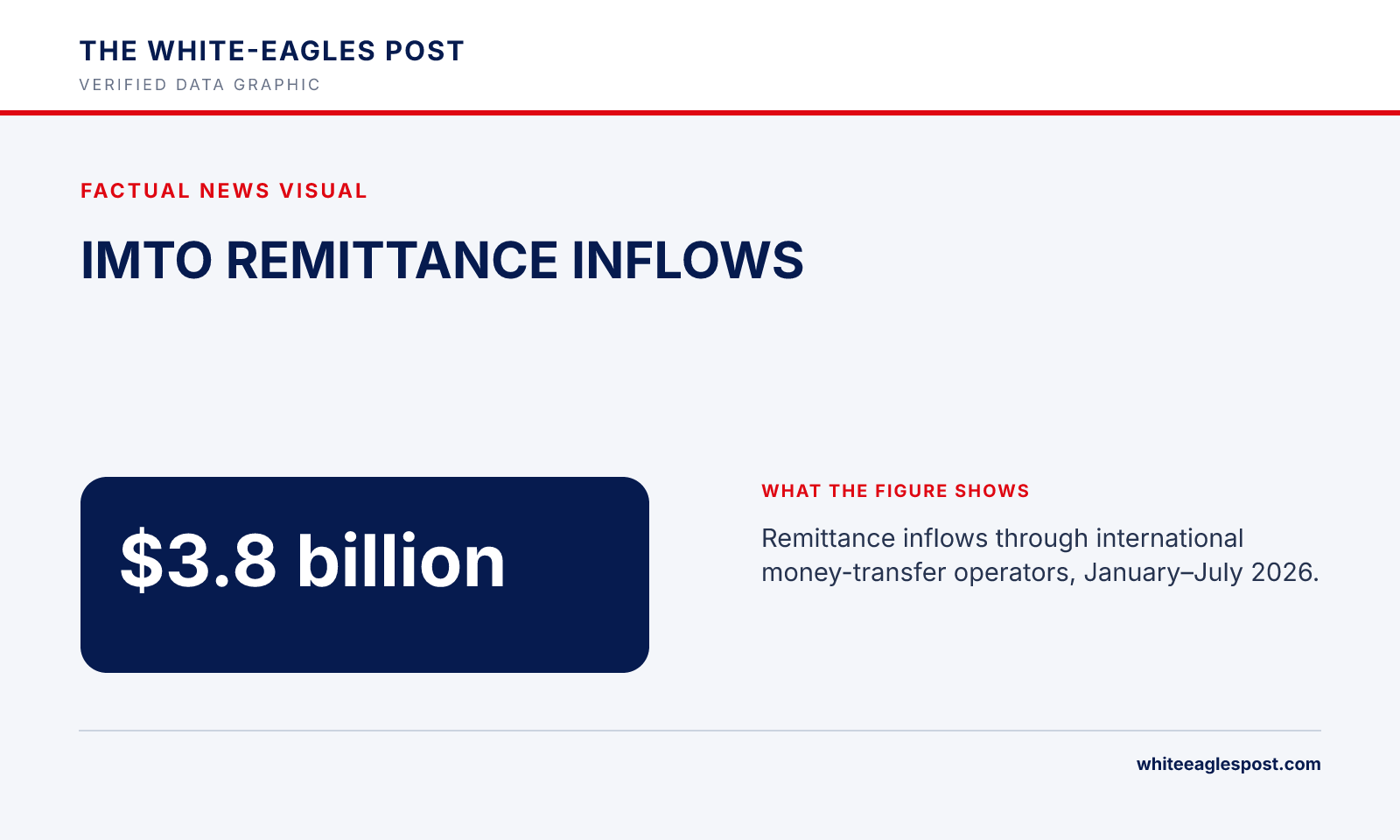
Nigeria recorded $3.8 billion in remittance inflows through international money-transfer operators between January and July 2026, according to the Central Bank of Nigeria. The total included about $947 million recorded in July.
The seven-month figure highlights the role of formal remittance channels in Nigeria’s foreign-exchange earnings. The International Monetary Fund said formal-channel remittance flows rose after reforms and recommended further strengthening official channels as part of efforts to diversify the country’s foreign-exchange earnings.
On 24 March 2026, the Central Bank of Nigeria issued a directive requiring international money-transfer operators to use designated naira settlement accounts with authorised dealer banks for beneficiary payments and settlements. The requirement set out the settlement route for payments made to remittance beneficiaries and for related operator settlements.
The remittance figures come against a backdrop of pressure on Nigeria’s external position. Net external reserves had fallen to about $3 billion at one point, while outstanding foreign-exchange backlogs had exceeded $7 billion.
The IMF’s recommendation places formal remittance channels alongside other sources of foreign-exchange earnings, rather than reliance on a single source. Its assessment noted that remittance flows through formal channels increased following the reforms.
July’s inflow of about $947 million formed part of the $3.8 billion recorded across the first seven months of 2026.